We grew this unruly wall of ivy outside our bedroom window as a privacy screen to shelter us from the neighbours.
 |
| Left pic, looking southwards, and right pic looks northwards |
As you can see from the above, it needs quite a bit of trimming after the early spring growth.
I was getting ready to trim it back, when I noticed little flurries of activity within the ivy wall and, after searching carefully (didn't want to frighten the birds away), I found the nest the New Holland Honeyeaters were building.
 |
| The wall of ivy - can you spot the nest? |
The day I found the nest, a big storm came, with very strong winds and heavy rain, and the following morning I went out to see if the nest had been damaged or dislodged.
The nest was still there, and the mother bird was sitting in it.
 |
| Mother bird's right eye. The leaves still bear moisture from the storm. |
 |
| From this angle, you can see the depth of the nest and mother's beak. |
These were the only two angles from which I can view and photograph the nest.
 |
| This was taken a day later on a brighter and sunnier day. |
Even though the day was sunnier for the pic above, it was still very dark where the nest was and the photo above was taken at 3200 ISO, f5.6 at 1/30 with the 70-300mm lens at full stretch.
 |
| Got mummy bird's both eyes in this shot. |
Sad to say, I don't think I'll be around when the eggs finally hatch and see the hatchlings leave the nest. The eggs will take about 2 weeks to hatch and the young ones will take another two weeks before they get out on their own.
We'll be leaving in a week and a half for a 3 week holiday.
Did you manage to spot the nest? It's in that little black spot in the centre of the red circle.
That little black hole is actually getting smaller each day, as the ivy continues its vigourous growth.
And if you're wondering what the
New Holland Honeyeater looks like, here's a photo I took many years back.
Trimming the ivy wall will have to wait till my tenants leave their nest.


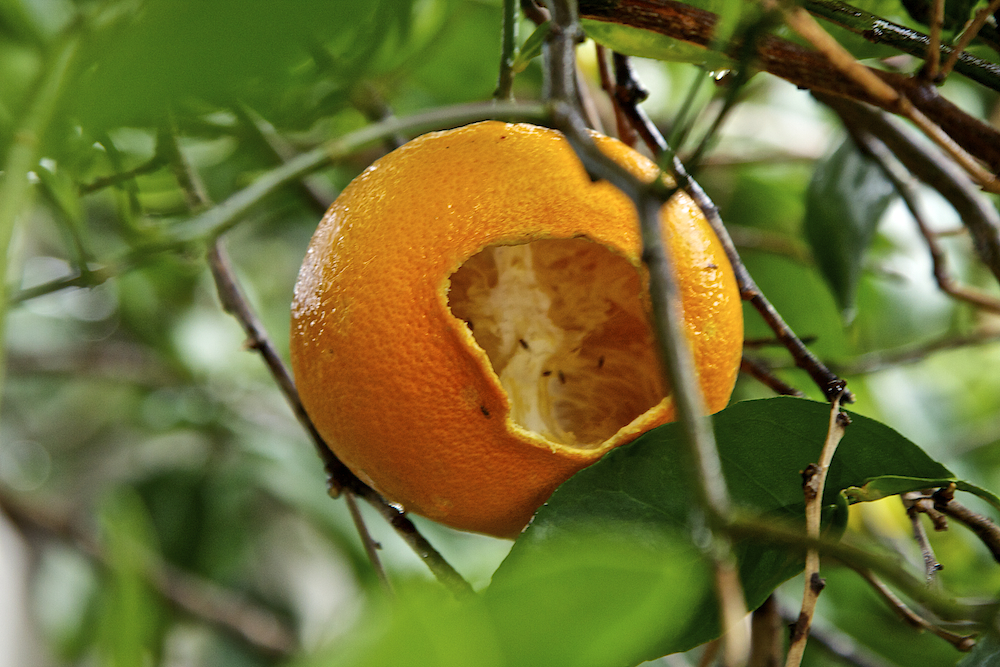
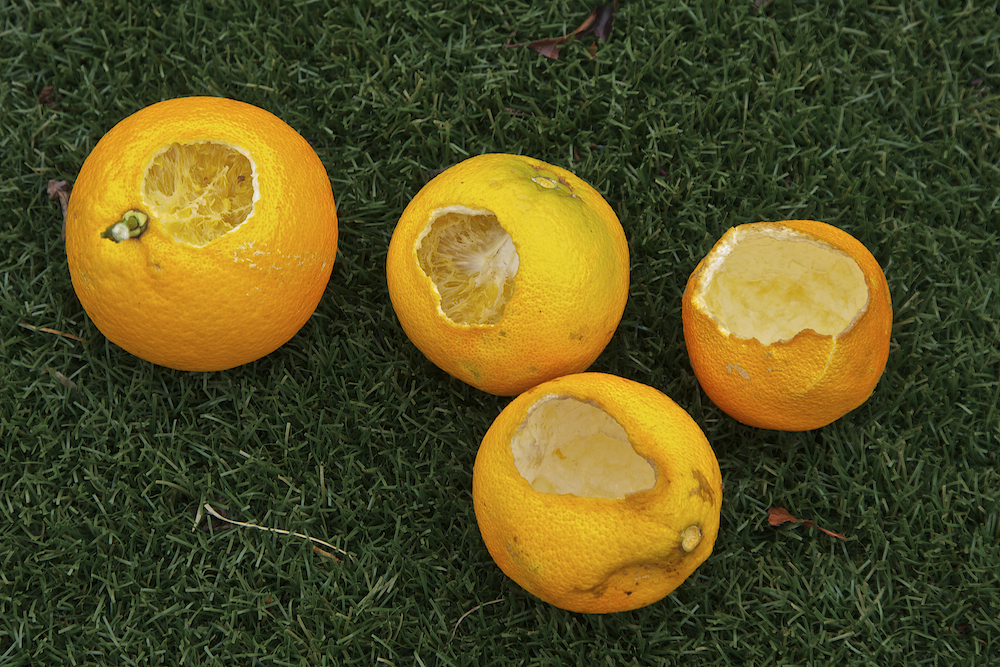
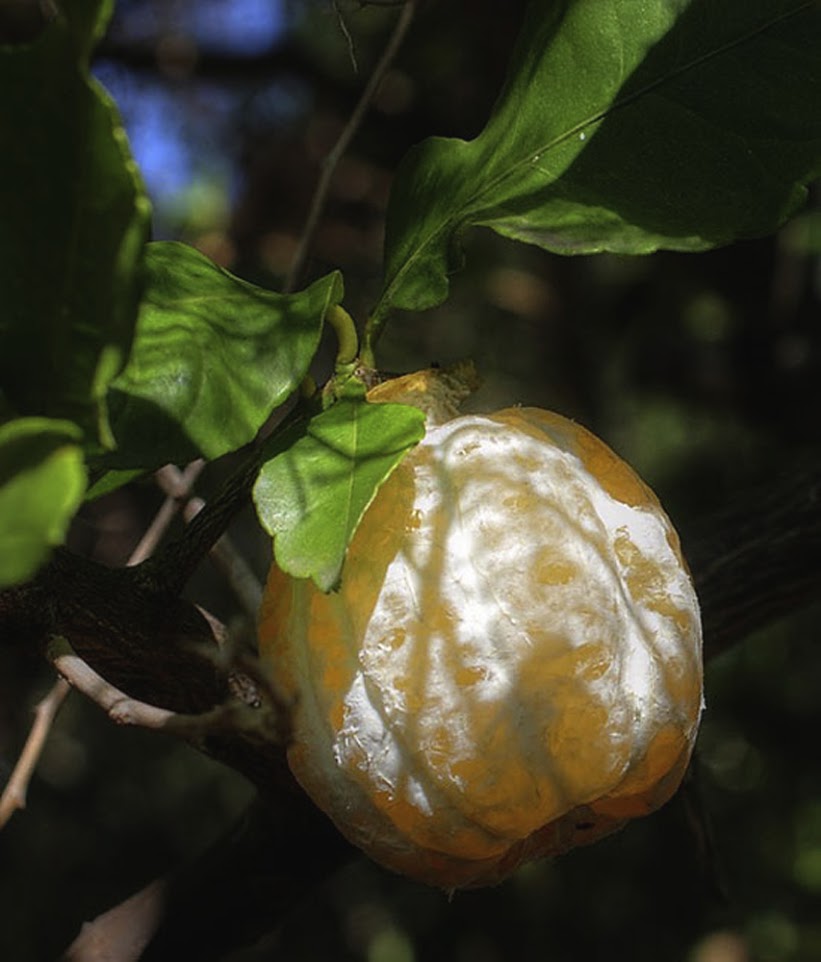
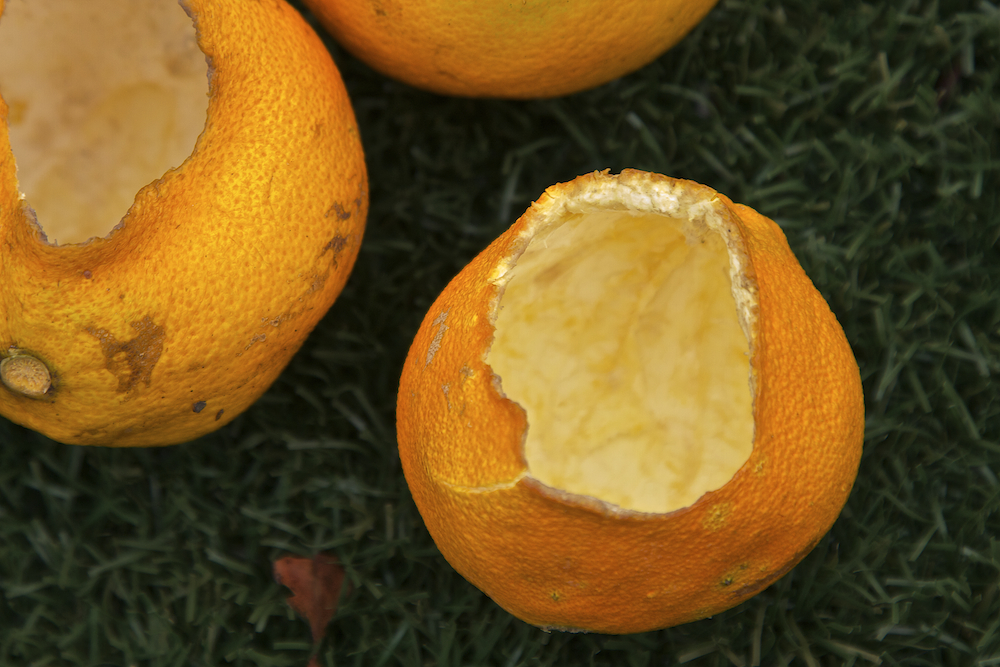 Some bird could be blamed for this, I suppose, but this lemon from my neighbour's tree remains a mystery.